Category: software

  • Philosophical about virtualisation

    I stop and ponder things from time to time. Get philosophical about why we’re all charging like lemmings after buzzwords without stopping to wonder why or if we’re really going in the right direction. I’ve seen people end up in dead end careers because they were too near sighted. I dont want to end up like that.

    This article reminded me about a particular topic i ponder from time to time; Virtualisation.

    Google fires back at VMware

    I’ve known about VMware since it began yeeeeears ago. back then, i saw it as a developer tool, for people who needed to try various operating systems but having multiple hardware boxes wasnt practical.

    fast forward to the here and now, and virtualisation is all the rage, with VMware being top dog.  I’m from a telco core systems background, which is pretty much pure unix, of varying flavors.  vmware is almost exclusively used by SME, who are all windows shops.

    My opinion is that the dominating reason for vmware being such a huge success is the nature of windows and the apps that run on it.  windows server apps dont play nicely with each other, thus the resulting plethora of servers, each running one or two apps, all under utilised, with headroom for peak usage.

    In the unix world i’m used to, multiple apps all run happilly alongside each other.  the first big production systems i worked on were a pair of Sun enterprise 3000 servers. they ran mail, news, web, proxy, dns and some other minor apps. all on a single instance of Solaris. the apps were installed on external SAN disk and could be failed over between the two servers. this was in the late 90s.  ten years later, vmware is bringing to the windows world the efficiencies and high availability features that has been available for a long time in the unix world.  that said, even the unix world lagged behind the mainframe world.

    that got me thinking, why the move from mainframe to unix to wintel?  its about $.  when “open systems” aka UNIX started to beat the pants off mainframes, it was because of cost. the systems were good enough for what they were needed for and a lot less expensive. the fact that the technology wasnt as impressive didnt mater. the business case, weighing everything up tipped in favor of unix.   later, for the SME, the same thing happened between windows and unix. windows was “good enough” and required much less skill to work with. many companies couldnt afford the skilled sysadmins. their wages would cost the company more than the losses due to system crashes/outages.

    vmware helps companies run their windows environments in a much better way, without changing the way those companies’ apps work.  google helps companies by offering a whole new way of using software. new applications. gmail instead of Exchange/Outlook.  Google Apps instead of the MS Office Suite.

    as a result, system/hypervisor virtualisation is not needed by Google, they virtualise the apps.  the fight is between Google trying to convince companies to consume IT apps in a new way and VMware trying to convince companies their existing way is fine, but that vmware can make it run better.

    pass the popcorn 🙂 this should be fun to watch

    NOTE: VMware and Google are just examples. there are other players in each of their respective markets, they’re just the leaders in my opinion.

  • Fishworks finally released

    Sun’s super-secret-squirrel storage appliance project has been under wraps for years now. We’re talking Apple style secrecy.

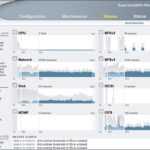
    About a week ago they finally launched product.  Another cool bit of news is that there is a vmware ‘simulator’ version available for download. cool.

    The “fishworks” project was rumoured to be Sun’s NetApp killer NAS appliance, based on ZFS and solaris with a nice GUI.  This turned out to be bang on.  The GUI must have been what took the most time and effort, it looks slick.  NetApp have done bugger all with their GUI. I find it very clunky.

    add Fibre Channel support, de-duplication and if the performance is good Sun might just have a winner.

    UPDATE:  I’ve just seen Sun’s stock price chart and profit/loss info over the last few years. It’s in freefall. Lets hope this new stuff isnt too little too late.

    UPDATE2: it was. Oracle bought Sun

  • New sandbox PC

    I bought a new PC recently to run virtual machines on.  Virtualisation is all the rage, so I’ve decided to play around with Xen and VMware.  It also gives me an easy way to play with numerous OSes without having to frig around with hardware. As GNS3 is to Cisco routers, this box will be to OS’s.

    I’ve got ESXi on it at the moment with a ReadyNAS NFS fileshare set up as a datastore in addition to the internal disk.

    Thanks to nice corporate discounts, i was able to get this spec for a good price;

    HP Compaq dc5800 SFF

    • Intel Core 2 Quad Q9300 processor
    • 8GB RAM
    • 160GB SATA-2 10K rpm HDD
    • Intel PRO dual port gig-eth network card

    PS: Rational Survivability is a good blog for people interested in Virtualisation and Security

    UPDATE: Something to be aware of. Many corporate desktops have the Virtualisation enhancements in the CPU (Intel: VT-x) turned off by default for security reasons.  On this PC i had to upgrade the BIOS and drill down through the security menu to find the option to turn it on.  There was no doco on it that I could find and HP’s support people had no clue.

  • SANS 2008

    A little while ago I discovered that Verizon has annual training budget for employees to do work related courses of their choice.  Around that time I learned that SANS was holding one of their training events here in Sydney. I’ve always wanted to do a SANS course but the cost put me off.

    I enrolled in “SEC502: Perimeter Protection In-Depth“.  I’ve got a lot of experience with designing and building datacenter networks but it’s been some years since i was was working with people that i could call mentors. So I could do with a bit of a refresher.  The course was being run by its author, Chris Brenton.

    The course finished up yesterday. It was an intense 6 days of theory, practice and examples from Chris’s extensive experience. This course was definately worth the money. I’ve got 6 books of course notes full of scribbled comments. I’ll be going back to the books for months or more, to get what i couldnt absorb during the course itself.

    It was the best course I’ve ever done. Equal best with training i did with Dr. Rex di Bona some years ago.

    My next task is to study for the GIAC certification that’s associated with the course. It’s open book, so that worries me a little. It’ll be hard!

    Another attendee’s blog: Chris Mohan

    Some relevant websites;

    InGuardians Dr Rex Di Bona

    UPDATE: 4 Mar 09 – A week and a bit ago I passed the exam. I’m now a GIAC Certified Firewall Analyst (GCFW)

  • Cisco router lab

    It can be very hard to get hands on practise working with networking technologies. It usually requires a stack of routers and switches to be able to configure up a meaningful topology. There are simulator software packages but they don’t run the code that runs on real routers.

    Recently I discovered dynamips written by Christophe Fillot who is either a phd student or faculty member at UTC (University of Technology of Compiegne, France), I’m not sure which. Its an application that emulates the MIPS hardware of a range of Cisco routers. Cisco IOS software can be booted by this emulator. IOS software is not distributed with dynamips as that would be a violation of Cisco’s copyright. If you have a Cisco support contract you will have access to IOS software downloads. In addition to the core dynamips application there is dynagen (written by a number of people) which is a python user interface which makes interacting with dynamips a whole lot easier.

    To get started, head over to the tutorial on the dynagen website

  • Confluence – enterprise wiki

    confluence_logo.gif In a corporate work environment a wiki is such a fantastic tool for collaboration. I’ve tried out a lot and none were quite good enough for enterprise use. Then a friend put me onto Confluence. Its easy to setup, backup, upgrade and migrate. I’m a fan now. I went to a talk last week at Atlassian’s offices here in Sydney on how to promote wiki use in your organisation. The basis for the talk was the site wikipatterns.com. Their new office is very nice and they provided beer and pizza; quality pizza and my favorite beer, Stella Artois. awesome!

    confluence-model.gifI even use an instance of confluence for my personal stuff; both general and career related. The main instance I run on my laptop. Every so often i back it up (easy, just a couple of clicks and save a zip file to a usb memory stick) and take it home to restore onto Confluence instances i have running there. I have 3 instances installed; on OSX, Solaris and Windows. All running on Tomcat and MySQL.

    Highly unlikely that all of them could be lost. Saaaaaafe.